Students Take the Lead at Teravista Elementary’s Leadership Day
At Round Rock ISD’s Teravista Elementary, leadership is lived every day. On Leadership Day, students take center stage, guiding visitors through a campus where their voice and their growth shape the learning experience from classroom to classroom.

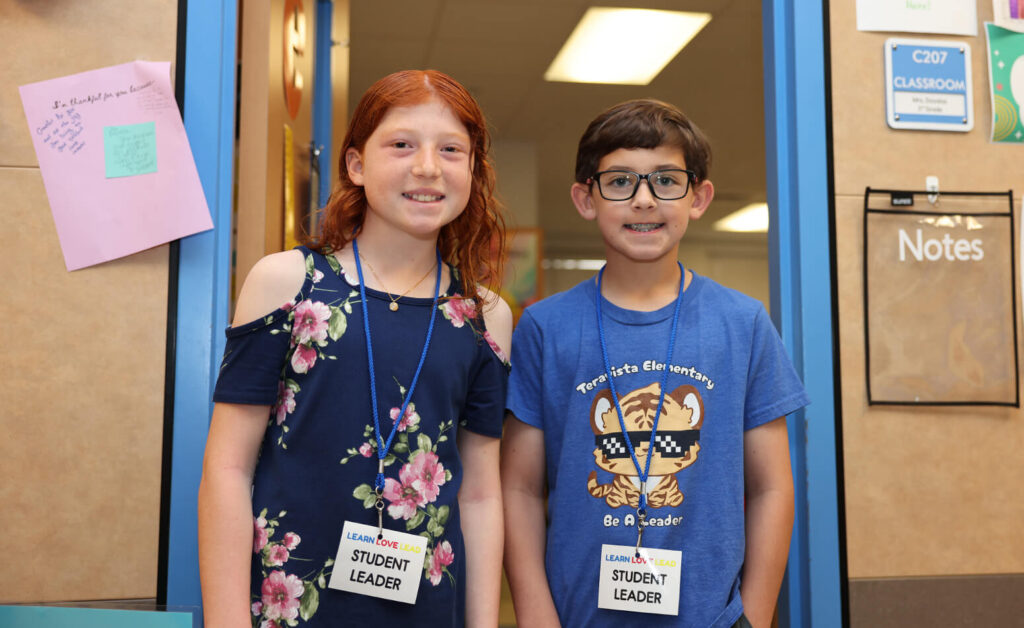
Visitors arriving at Teravista Elementary’s Leadership Day are greeted by students. They welcome guests at the front of the Round Rock ISD school and guide them through the building with confidence that feels both practiced and genuine. A fifth grader pauses to hold the door and offer directions. Another checks a list and leads a small group toward a classroom, speaking clearly and making eye contact as they walk.
Inside, the dynamic continues. Students stand beside their desks or at the front of the room, ready to explain what they are learning. In some rooms, students flip through leadership binders with visitors, pointing to charts and reflections that document their growth over time. In others, they describe classroom roles and how those responsibilities help the entire group function more effectively.
It does not take long to realize that this is not a typical campus event. Students are not waiting to be called on. They are leading conversations, and the adults in the room are listening.
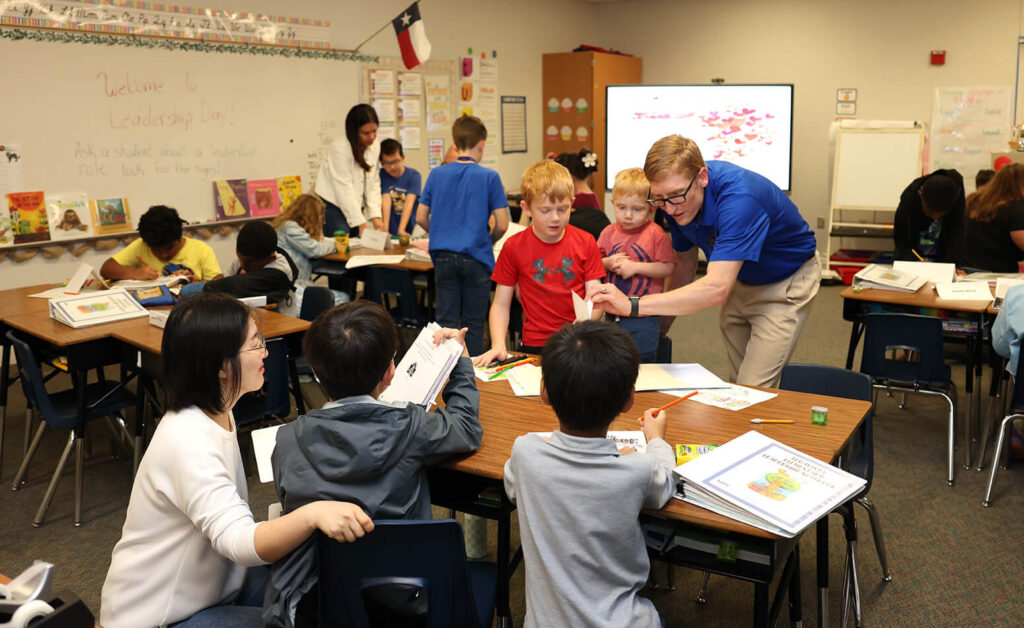
For many visitors, Leadership Day offers a first look at what it means for students to take ownership of their learning and their role in a school community. The experience is intentionally student-led from beginning to end, giving guests a clear view of how leadership is embedded in daily life at Teravista.
Principal Michael Wakefield sees the event as a reflection of the school’s broader mission.
“As a Leadership Academy, our focus for our students is to learn, love, and lead,” Wakefield said. “Leadership Day is an opportunity for students to show parents and visitors their leadership binder, talk about their classroom jobs, and share the ways they lead every day.”
Teravista’s designation as a Leadership Academy is tied to its implementation of the Leader in Me framework, a model developed by Stephen Covey and expanded through a partnership with Franklin Covey. The framework adapts the principles from The 7 Habits of Highly Effective People into age-appropriate practices that help students build leadership and interpersonal skills over time.
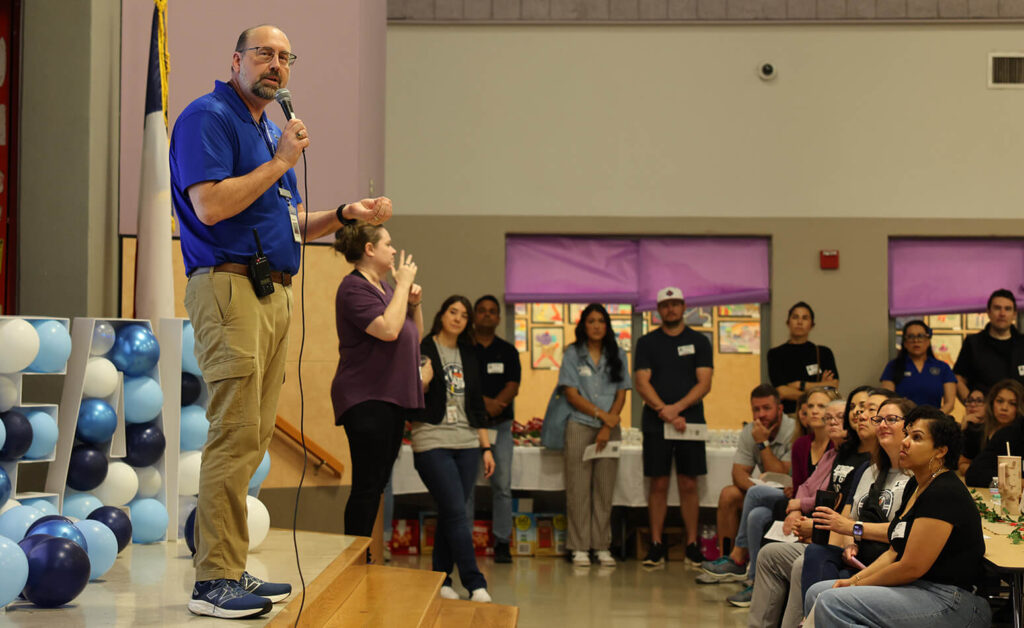
That sense of ownership is something students recognize as well. Kenny, a fifth grader participating in the event, described Leadership Day as a chance to demonstrate what students are capable of when they are given responsibility.
“It’s a day to show that you’re a leader,” he said. “Everyone can see what you can do.”
Students prepare for that moment in advance. They practice their roles and work together to ensure the day runs smoothly, and that preparation reflects the same habits students use throughout the year.
Fourth grade teacher and longtime Region 13 ATPE volunteer leader Stephanie Stoebe said that sense of purpose is what makes the day stand out.
“There are a lot of people coming through in a short amount of time,” she said. “The kids understand that they are representing the school, and they rise to that expectation.”
Leadership Day draws a wide audience, from parents to educators, all coming to see the model in action. Visitors move through classrooms in small groups, spending time with students as they explain their learning and share their progress.
By the time visitors leave their first classroom, the pattern is clear. Students are leading and reflecting on their own learning in ways that feel natural to them. Leadership Day simply brings that work into view.
A Culture Built Over Time
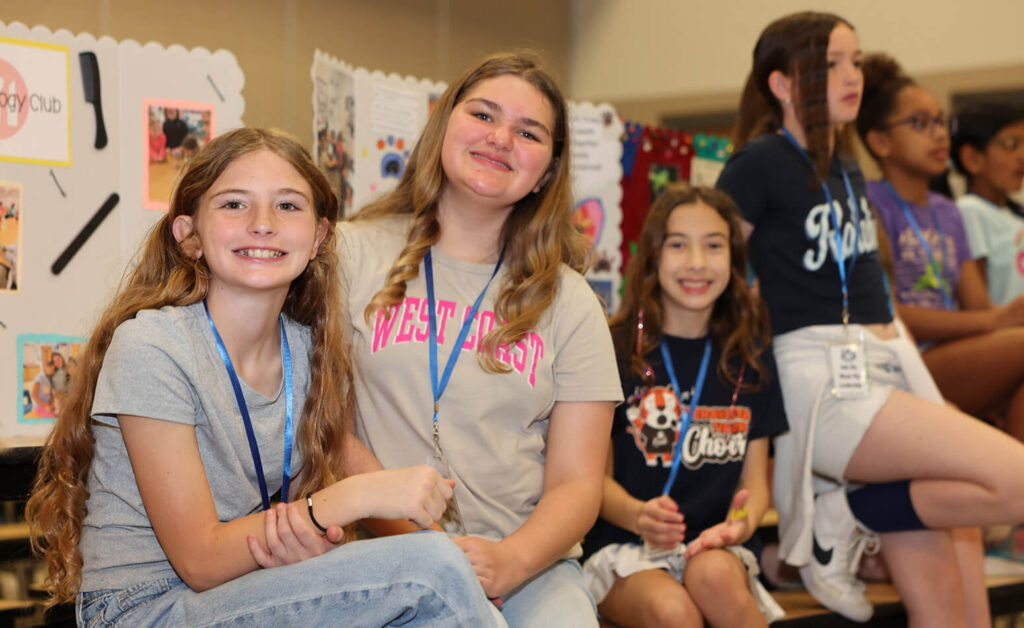
What visitors see on Leadership Day reflects more than a single event. It represents years of intentional work and a shift in how the campus approaches teaching and learning.
Teravista’s leadership journey began more than a decade ago with a single classroom. During the 2010–11 school year, fifth grade teacher Rachel DiCarlo began introducing her students to The 7 Habits of Highly Effective People, the leadership framework developed by Stephen Covey.” The change did not go unnoticed.
“People started seeing that her fifth grade students were making better choices and showing stronger behavior,” said second grade teacher Natasha Zirlott. “Other teachers began asking what she was doing differently.”
Curiosity turned into action. DiCarlo attended a Leader in Me symposium on her own time and returned with ideas she shared with colleagues. Interest spread across the campus, and teachers began exploring how the habits could shape their own classrooms.
“At first, we were introducing it informally,” Zirlott said. “But it didn’t take long for us to realize that if we were going to do this, we needed to do it the right way.”
That decision led to a formal partnership with Franklin Covey and the start of Teravista’s Leader in Me journey in 2011. The work that followed required consistency and commitment. Over time, the campus built a shared language and a set of practices that extended across grade levels.
In 2014, Teravista earned Lighthouse status, recognizing the strength of its implementation. Nearly a decade later, the school reached Legacy status, placing it among a small group of campuses worldwide that have sustained the model at the highest level.
Lighthouse status is awarded to schools that demonstrate strong, sustained implementation of the Leader in Me framework, including measurable academic growth and a clear leadership culture across the campus. Legacy status represents the highest level of recognition, indicating that leadership practices are deeply embedded and sustained over time, with students consistently taking ownership of their learning and leadership roles.
For fourth grade teacher and ATPE member Stephanie Claypool, that progression reflects a gradual but meaningful shift in ownership.
“It starts as teacher-guided, then becomes student-guided, and now as a legacy campus, students are basically doing everything, and the adults are facilitating.”
Stephanie Claypool
Fourth grade teacher & ATPE member
Leadership is introduced early and reinforced often. Younger students begin by learning what it means to be responsible for themselves and respectful of others. As they grow, they take on more responsibility, setting goals, tracking progress, and contributing to the classroom community in more visible ways.
The expectations are consistent across the campus, which Claypool sees as essential.
“We are very intentional,” she said. “It doesn’t matter what classroom they go into. We are all using the same language and building those habits year after year.”
Wakefield described that consistency as one of the defining features of the school’s culture.
“We teach the ‘7 Habits’ in everything that we do,” he said. “It is in the environment. You can see it everywhere.”
That belief carries through every classroom and every grade level. By the time students reach Leadership Day, they are not stepping into something new. They are stepping into something they have been practicing for years.
Leadership in the Classroom
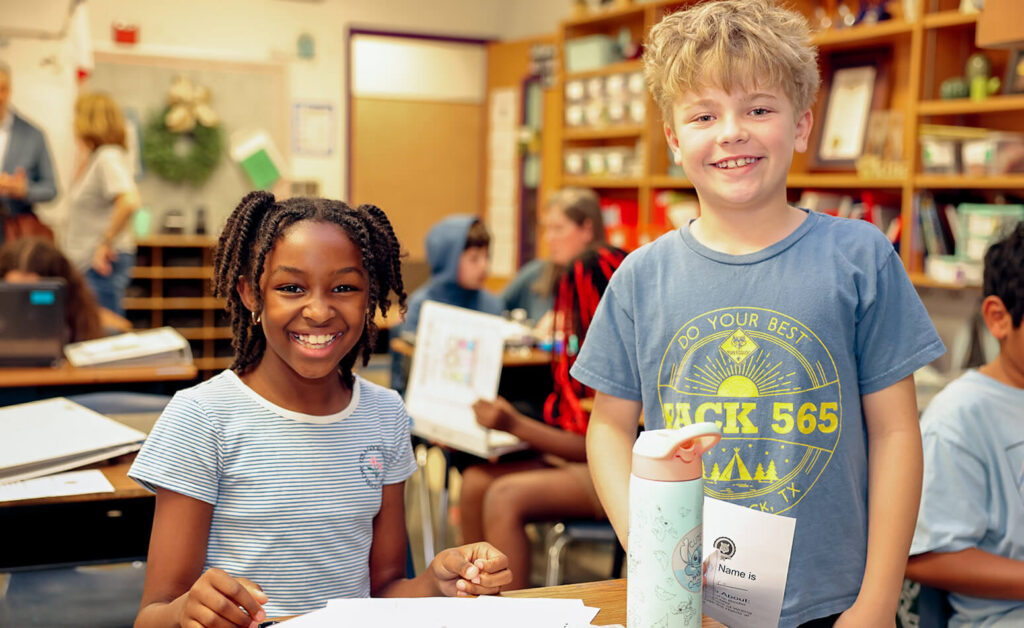
In Stoebe’s fourth grade classroom, leadership is not set aside for a specific time of day. It shows up in the middle of instruction, woven into the way students think and speak as well.
During a reading lesson, students are asked to look closely at a character’s decisions. Instead of focusing only on plot, Stoebe pushes them further.
“When we analyze a character in a story, I’ll ask the kids what habit that character could have used to make a better decision,” she said. “And they’ll tell you. They’ll say, ‛He didn’t work well with others,’ or ‛He didn’t think about what would happen next.’”
Moments like that turn abstract ideas into something students can apply, and the same approach carries into other subjects. In science, students examine how classification works and how scientists make decisions based on evidence. Stoebe connects that thinking back to the habits, helping students see how planning and reflection shape real-world work.
“It’s critical for me that we apply it in everything we do,” she said. “If we’re serious about this, then it has to show up in the way we teach and the way they learn.”
Over time, that consistency changes how students approach their work.
“You can hear it in the way they talk,” Stoebe said. “They’re thinking about what they need to do next. They’re making decisions as they go. It becomes part of how they learn.”
That mindset extends beyond academics and into everyday interactions. Stoebe described a moment on the playground when two students collided while playing. One student was upset, and the other was hesitant to approach the situation. Instead of simply stepping in to resolve the issue, Stoebe used the moment as an opportunity for reflection.
“I asked him what happened and how he was feeling,” she said. “We talked through it. The habit of seeking to understand first, that’s something they can use right then.”
Those conversations help students develop the ability to manage conflict and communicate more effectively.
“We’re not just telling them to stop and behave,” she said. “We’re helping them think through their actions and what they want to do differently.”
The impact becomes more visible over time. Stoebe recalled a student who entered her classroom reluctant to write and unsure of his abilities. On a previous assessment, he had written only a few words before giving up. Through consistent encouragement and opportunities to take ownership of his work, that began to change. He started writing during creative time, experimenting with ideas and building confidence.
“Now I have to tell him to stop writing so we can move on,” she said. “He’s one of the strongest writers in the class.”
And that growth is not limited to one student. Across the classroom, students are learning how to successfully set goals and adjust their efforts to achieve them. They begin to see themselves as capable of improving, which shapes how they approach challenges.
The same principles show up across the campus. In music, students learn to practice with purpose and to contribute to a larger group. Music teacher Kristina Caffey sees the habits as a natural fit for her subject.
“We focus on putting first things first when it comes to practice,” she said. “And when students perform together, they have to think about how to work as a group and support one another.”
In art, students take a similar approach.
“The art classroom is a place where leadership and creative expression come together,” art teacher Michelle Dickens explained. “Students plan their work, take initiative, and collaborate on projects that become part of the school.”
One example is the fifth grade legacy project, where students work together to design and create a large-scale piece that remains on campus for future classes to see. That kind of work reinforces a sense of ownership that extends beyond individual assignments.
Tracking Growth and Ownership
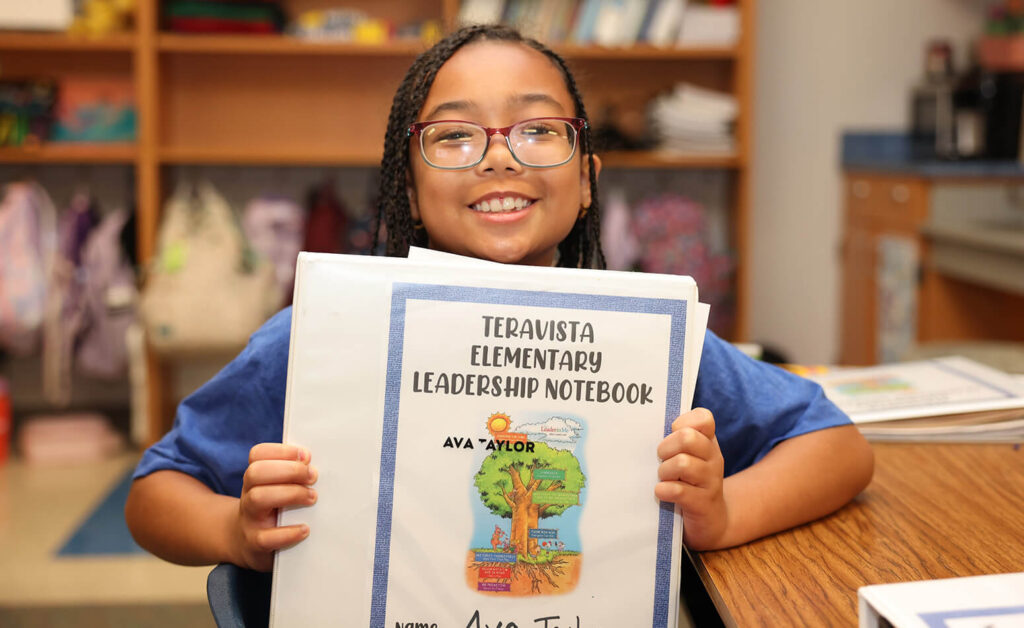
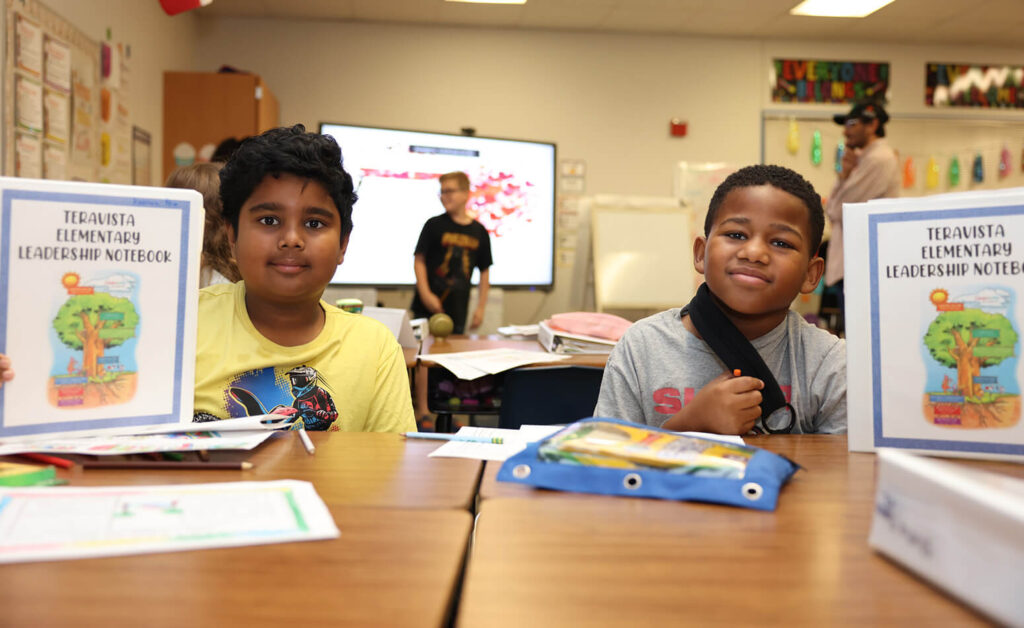
In classrooms across Teravista, leadership becomes visible in a very concrete way. The most recognizable place to see that is in the leadership binder each student keeps from year to year. By the time students reach the upper grades, those binders have become a catalog of their journey, telling their unique story through their work.
“It’s like a portfolio,” Claypool said. “They can look back and see how much they’ve grown from where they started.”
For students, that growth is not abstract. It is something they can flip through and point to.
“It’s basically like a memory of everything you did,” said Kenny, a fifth grade student. “It has your goals and your celebrations and all your work.”
During Leadership Day, those binders become a centerpiece of conversation. Students open them for visitors and walk through their progress, explaining how they set goals and what they have done to reach them.
That process begins with what the school calls wildly important goals, or WIGs, a framework that helps students focus on a single, measurable priority. Each grade level focuses on a key academic area.
“We’re working on math this year,” Kenny said. “We track our goals and see if we’re getting closer.”
That daily tracking builds a sense of accountability that grows over time. Wakefield described how that process plays out: “I was talking to a second grader whose goal was to grow in reading. He had decided how he was going to get there, and he was tracking it every day. You can see in his binder whether he’s meeting his goal or not.”
Students do not track their progress in isolation. They talk about it with classmates and reflect on what is working. If they are making progress, they can see it build over time. If they are not, they begin to think about what needs to change, and that reflection is part of the process.
“You can look back and realize what you’ve accomplished,” Stoebe said. “And if you’re not where you want to be yet, you start thinking about what you can do differently.”
The visibility of that growth matters. Instead of waiting for a report card or a test score, students see their progress unfold day by day. They begin to connect effort with results in a way that feels immediate. For some students, that realization becomes a turning point. Stoebe described how students respond when they begin to see their progress clearly.
“They open that binder, and they see all the days they met their goal,” she said. “They’re proud of that. It means something to them.”
The binder also includes personal reflections and moments of achievement that students choose to highlight. It becomes a place where they can see not only what they have learned, but who they are becoming.
Finding a Voice
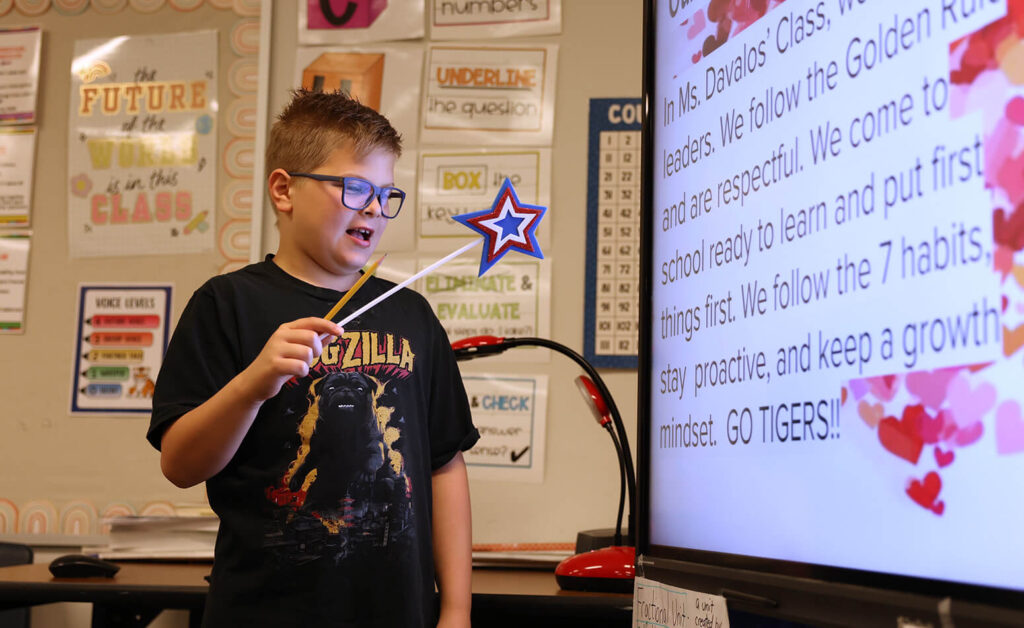
As students move through Teravista’s leadership model, one idea begins to stand out: They are encouraged to find their voice.
The concept builds on the foundation of the “7 Habits,” asking students to take what they have learned and apply it in a way that reflects who they are. It is about confidence, as well as purpose. For Stoebe, that idea resonates on a personal level.
“If you don’t have a voice in what you’re doing, why do it? That’s what leads to confidence. That’s what leads to creativity. It’s what helps you figure out where you want to go.”

Stephanie Stobe
Fourth grade teacher & ATPE member
In her classroom, that shift is often gradual. Students do not always arrive ready to speak up or take risks. Some hesitate and others doubt their abilities. Over time, those barriers begin to change. Wakefield has seen that same kind of transformation across the campus.
“We have students who come in very quiet,” he said. “And over time, they find their voice.”
He recently observed a moment that captured that change. In a second grade classroom, a student who had been selectively mute began speaking and leading in front of others.
“It gave me goosebumps,” Wakefield said. “To see that kind of growth, that confidence, that willingness to step forward.”
Those moments are not isolated. Claypool described a student who struggled with behavior and engagement before beginning to see himself differently through leadership opportunities. At first, the student was unsure of his place in the classroom. He tested boundaries and had difficulty staying focused. Over time, something shifted.
“He started to realize that he could still be a leader,” Claypool said. “Even if he had a bad day, he could come back the next day and start fresh.”
That mindset changed how the student approached his role in the classroom. When he ran for a leadership position, he did not win. Instead of becoming discouraged, he reflected on the experience.
“He told me, ‘I just wasn’t ready yet,’” Claypool said.
The following year, he tried again. This time, he earned the role. And the change did not stop there.
“He started mentoring other students,” she said. “He saw growth in himself and wanted to help others do the same.”
For teachers like Zirlott, those moments reinforce a broader belief about students.
“Every child has something to contribute. There are many different types of leaders, and this helps students recognize that in themselves.”
Natasha Zirlott
Second grade teacher and atpe member
That recognition extends into how students interact with one another. When conflicts arise, students are encouraged to express their feelings and listen carefully to others. They practice articulating their perspective and working toward a solution.
“We’re teaching them how to solve their own problems,” Zirlott said. “When they can do that, you see their confidence grow.”
For students, finding their voice does not always mean speaking in front of a crowd. Sometimes it shows up in quieter ways. Kenny sees it in the choices students make.
“You get to choose what you want to do,” he said. “That’s important because you’re you, and you get to make your own choices.”
That sense of ownership shapes how students view themselves. They begin to see that their ideas matter. They learn that their actions have an impact. They understand that they have a role to play in their classroom and in their community, and over time, those lessons build into something lasting.
Leadership on Display
By the time Leadership Day is in full swing, the purpose behind it becomes clear. What visitors are seeing did not begin that morning. It has been building over time in classrooms and in the daily routines that shape how students approach their learning.
“If a normal school day feels like a rehearsal, Leadership Day feels like opening night,” fifth grade teacher Holly Holubec-Brewer said. “Students are the experts, and it is their time to shine.”
Students are not repeating memorized lines or following a script. They are speaking from experience. They understand the systems they use, and they can explain why those systems matter. For Kenny, that sense of ownership is what stands out most.
“It’s a day to show that you’re a leader,” he said. “Everyone can see what you can do.”
That awareness shapes how students carry themselves throughout the day. They speak with intention and respond thoughtfully when visitors ask questions. For Wakefield, those moments capture the purpose of the work.
“We want people to see that this is real,” he said. “We want them to see what our students are capable of.”
Visitors leave with a clearer understanding of what student ownership can look like when it is developed over time. Parents see how their children are growing, not only academically, but also as individuals. Educators from other schools observe how the model works in practice and consider how it might apply in their own classrooms.
At Teravista Elementary, leadership is expected of every student. Students take ownership of their growth and their behavior. They learn how to make decisions with purpose and how to support one another. They begin to understand that their voice matters. They learn to lead. And on Leadership Day, they show exactly what that looks like.

David George
Past Managing Editor

Share Your Thoughts
Log in to the ATPE Online Community to communicate with educators from across Texas on this article and much more. Explore the community today!