Creating Connections: Meet Amanda Still, H-E-B’s 2026 Elementary Counselor of the Year
With a background in art and special education, Mesquite ISD counselor Amanda Still brings creativity and a relationship-centered approach to helping students navigate life's challenges. ATPE sat down with Amanda to celebrate her achievement, explore what inspires her work, and learn what lessons she hopes students carry with them beyond elementary school.
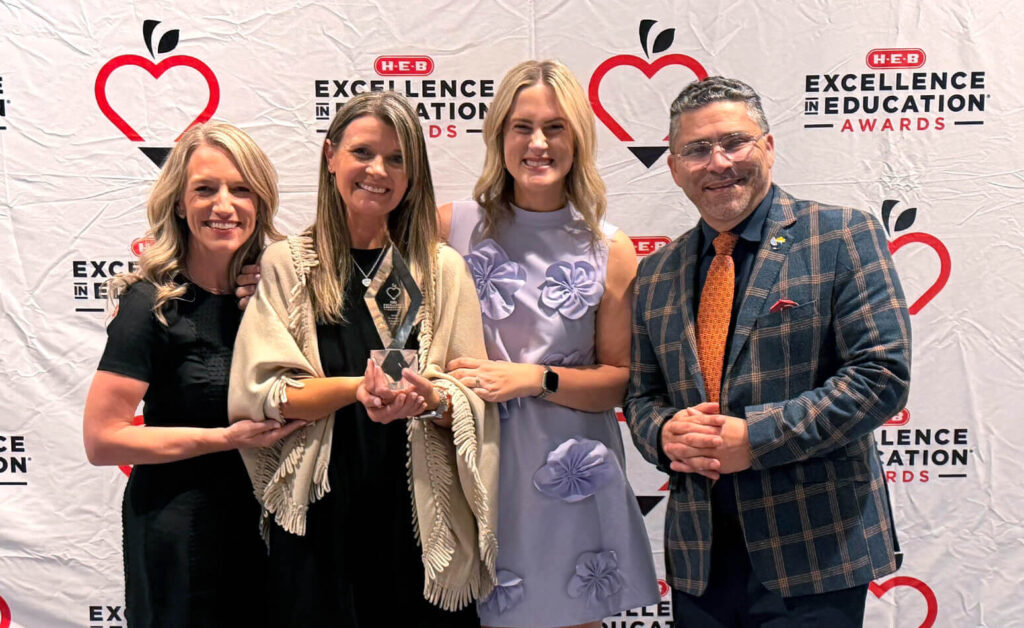
H-E-B Excellence in Education award winner and Mesquite ATPE member Amanda Still didn’t start her career in education, but she’s drawn on her experience along the way to create connections with all of her students and prepare them for the real world.
ATPE sat down with Amanda to talk about her journey into counseling and what she hopes her students take with them beyond elementary school.
What led you to school counseling?
In high school I was really involved in art, and then in college I discovered art therapy, which led me in a roundabout way back to school counseling.
I started my career in education working in special education in 2008. My students were visual learners, so I was able to lean into my art background to help them communicate and make connections. While working on my master’s in school counseling, I made a move to teaching art.
I really enjoyed being in the classroom and seeing my almost-200 kids a day. What I loved about making the jump to counseling was that I could incorporate the things I loved about art on a more personalized level. It’s amazing how many foundations transferred from the art room into school counseling, such as building relationships, expressing yourself, feeling safe enough to take creative chances, being able to recover from mistakes, problem solving, and making connections.
Do you still use art therapy techniques in your counseling practices today?
I only have a minor in it, so I’m not certified to use art therapy, but a lot of the techniques from teaching art still transfer over. When you have a kid that’s either nervous or quiet, talking face to face can be intimidating. Sometimes offering to just sit and draw with them takes that pressure off by looking down at a drawing or doodling together; it can make difficult conversations feel much more comfortable and relaxed. Art therapy is really about its process over perfection: It doesn’t matter what the final piece looks like; it doesn’t matter that it’s a mess. Just creating something with your hands can be therapeutic.
Has your entire career been in education?
I started in advertising, but I originally went to school to be a children’s book illustrator. When it was time to pick which track I wanted to take, an advertising major recommended advertising for a better chance at finding a job right out of school: I could still do storyboards and illustrate, but I knew I would need a job and wanted to be marketable, so I took the advertising art direction path, and I spent about three years in the field before realizing that it wasn’t where my heart was at.
Are there any other people who really stand out in influencing your career?
It’s pretty special that I have been part of Mesquite ISD since I was in elementary school. I don’t think a year has passed without someone in the district influencing my life or career in one way or another. My high school art teacher was one of my strongest influences growing up, and the art room was my favorite place.
Mesquite has an amazing counseling department with two phenomenal leaders. Both of them are always there to help with anything, from answering “real-quick” questions to helping with anything we bring to them in the moment.
Most importantly, though, I have a great relationship with my principal, and she has had an unbelievable influence on my career. I completely support and love her vision for the school. Our school’s motto is “if it’s best for kids we’re doing it,” and that is the driving force in all her decisions. The culture that she has created reaches beyond just the kids to their parents and to the local community. I am lucky to get to be a part of what she has created.

What keeps you passionate about the profession?
Definitely the kids, as well as the people I work with. My work family is almost as much of my family as my real-life family.
What I love the most about my job—and what I told H-E-B—is I get to be the person someone trusts and comes to on their bad day. I try hard to start building those relationships from the minute the students walk in so that they know my face, what I do, and why I am there, because you don’t want to wait until there is a bad day or an emergency to try to introduce yourself and earn that kind of trust.
Simply put, though, just being the person that is on their side and advocating for them makes every day worth it.
What do you hope first and foremost that students take away from their interactions with you?
There are so many things I hope for my students, but my biggest hope is that every student (or, really, everyone, for that matter, including parents and staff) that visits my office feels heard, and valued. I would never want anyone to feel like they are an imposition, and I hope they leave feel like we have started the problem-solving process.
I would like my fifth graders going into middle school to remember to actually talk to the important people in their life every day and make sure that includes their parents or guardians, not just their friends. I want them to remember to ask questions, not to be scared to take smart chances, and that a mistake is just a single moment of one day—but also we have to learn from those mistakes to make us better.
Mostly I want everyone to find the place they belong in school and do something great with it, and for them to remember they are resilient and can handle really hard things.
Tell me about a success story that stands out to you and illustrates the impact counselors have.
The first one that comes to mind is the grief group that I ran last school year. Originally the group was supposed to last eight weeks, but around week seven, they asked if we could keep meeting even though our time was up. This group ran almost all the way through the school year. They had formed this little community, which was so important because all their losses were fairly recent, so it was still very new and fresh to them.
At first, I did most of the facilitating, but by the end they were making new connections and even making strides at home. Their parents said communication had improved—from one-word answers to full-on conversations—that was one of the big ones.
One of the things I am really proud of at school is our daily morning meeting videos. It is based on our district’s four promises. I record a short two- to three-minute video that prompts conversation in the classroom. The students even come up to me during the day mentioning the conversations or sharing their ideas from the meetings. Teachers have expressed how it has built a family-like community in their class. One teacher told me it gave her the chance to learn so much about her students she would not have known, and the students realized how much more they had in common than they realized. It has helped teach empathy and grow a sense of belonging.
One of my other favorite things is when a kid makes a breakthrough in communication at home. If they’ve had a hard day, I always reach out to their parents, and sometimes the kids get nervous about it. I reassure them it’s just a talk and offer to let them sit in the conversation while I speak to their parents. The best part is when they come back the next day, and say, “I had the best talk last night.” It’s impactful when they realize they can go home and have the same type of conversations that they’re having with me with their parents. That way they know they’re supported all around and always have someone to turn to.
What are your key guiding principles as a counselor?
Relationships and communication: teaching people how to be better listeners because so many of the things that we struggle with are based on assumptions.
It’s important to get all the pieces of the puzzle because there are so many more sides to the story than what we see when a student walks in the door. Instead of jumping to conclusions, we need to talk to everyone involved because everybody has a different perspective and a different piece of that puzzle.
I try to teach kids from as early as possible the way we talk to ourselves matters and that we are harder on ourselves than we are on anyone else. I’ll ask a student: “Would you talk like that to your best friend?” And when they say no, I ask, “Then why are we talking like that to ourselves?” It’s such an important skill that even as adults we struggle with all the time.
Another foundational tool that I rely on often is being able to stay calm and help deescalate a situation or student when they are having a hard time. Getting the student calm takes patience and not reacting, but it’s after they take that deep breath when they regulate that the magic happens. When the student has found their balance and is in a place to talk and really process what happened, some of the best learning has happened in that moment.
Tell us about the application process for the H-E-B Excellence in Education Award.
It really started when I nominated my principal for the H-E-B Excellence in Education Award, and she was named North Texas Elementary Principal of the year. We actually got to go through this whole process together, which made the whole thing 10 times more amazing and special.
One of my former co-counselors nominated me, and I didn’t even know until I got the email saying, “Congratulations, you’ve been nominated; please complete this application.” The application questions were thorough and deep. Parts of the application made me stop and think about all of the different aspects of my job that I just do every day. You don’t really get the chance to take the time to stop and look at these moments through a microscope because you are already moving on to the next thing. It also held room to look for the moments worth celebrating you almost take for granted.
How did you react when you learned you had won the award?
The entire H-E-B awards weekend was absolutely magical. They were the absolute best host and made everyone there feel so valued and important the entire weekend. I have never experienced anything like it. During our section of the awards ceremony, as I crossed the stage after they introduced us, all I remember thinking was, “Enjoy this because it is over.” Then I heard them call the start of my school’s name—I heard them say the first name of my school, “Charles,” and after that, all I could hear was my heartbeat—I didn’t even hear them actually say my name. When I got up to give my speech, I couldn’t read it because my eyes were full of tears, and I remember thanking H-E-B the best I could, and I told everybody how much I loved every part of it. I know I’ll never have another year like this year, and the whole time I kept that at the forefront of my mind so that I’d enjoy every little bit of the experience.
What does it mean to win this award from H-E-B?
Everyone loves H-E-B, but the best part is that H-E-B loves us back, and I do remember I mentioned that in my speech. I love how much they celebrate educators, how much they support education and our students, and how much they love the people in Texas in general. I appreciate beyond words that H-E-B shines this light on the educators who often pour their whole lives into and give so much of their hearts to their students and campuses. Being named H-E-B elementary school counselor still feels like a dream I haven’t woken up from in the best way possible.
What does being a member of ATPE mean to you?
It’s like having these wonderful and supportive friends in your corner who are always there, somebody who always has your back, and knowing we’re being advocated for because there’s so many pieces that are always changing and [ATPE is] making sure that educators are heard and seen. And then the other piece is that it feels like this great safety net, like I can go and do my job to the very best of my ability.
How does the district support your work? What practices really stand out?
The district pours so much into our counselors and counseling department. We’ve just opened our second CARE clinic, which is a free counseling center for any Mesquite ISD student. The CARE Clinic provides extra counseling needs if a student needs to talk to a counselor regularly. They’re all licensed professional counselors, some of whom volunteer their time, and an amazing resource. When we see students struggling beyond the support that can be offered on the campus level, it gives us a place to offer more help or services for students and their families. I work really hard to build strong relationships with parents, and when they hear the CARE Clinic is part of the district, they already trust it. It makes all the difference in the world in getting the next steps in help for their students.
If you could share one message with educators, parents, and students across Texas, what would it be?
Build relationships from day one, and ask good questions and really listen to the answers. Spend time with each other, talk, play games together, don’t be scared to apologize, and make genuine connections—because every single kid is worth getting to know and has an interesting story to tell.
Congratulations to Amanda on this well-deserved recognition—we wish her continued success throughout her career!

Jennifer Price
Digital Marketing Specialist