Interview: TEA Inspector General Levi Fuller
ATPE talked to the Texas Education Agency’s Levi Fuller about the agency’s goals for the newly created position of inspector general and what educators should know about the current approach to reports of educator misconduct.
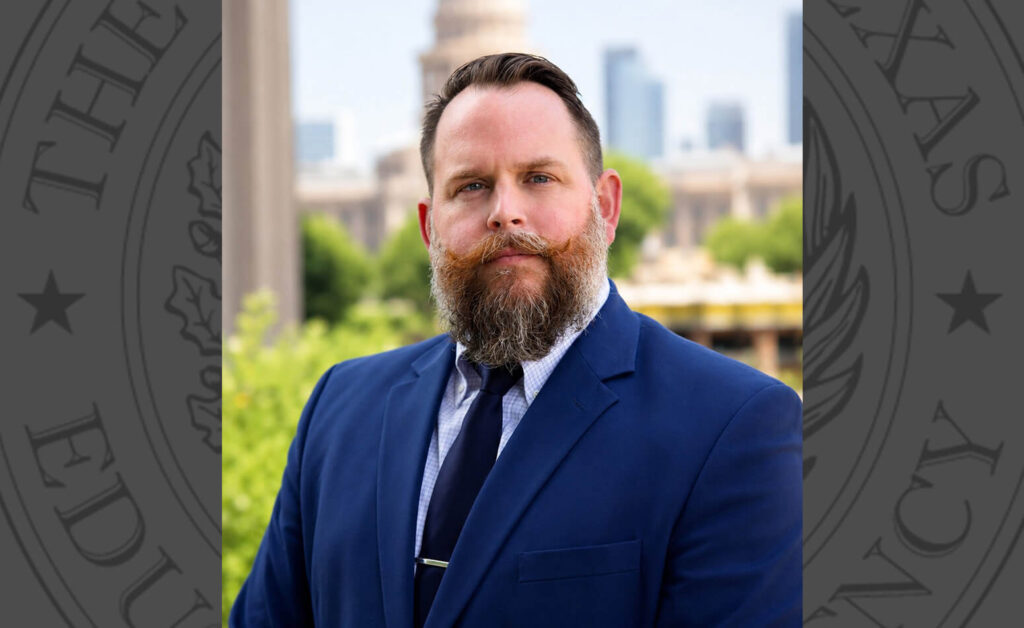
In February, the Texas Education Agency (TEA) announced the selection of Levi Fuller as its first inspector general for educator misconduct. In this newly created role, Fuller oversees the enforcement of educator misconduct policies and processes.
Fuller comes not from education but from the legal and military worlds. He previously worked as an assistant attorney general in the office of the Attorney General of Texas. He’s also a veteran, having served as a judge advocate, infantryman, and artilleryman in the U.S. Army and Army National Guard. Most notably, as a judge advocate, Fuller worked with the U.S. Senate and the U.S. Department of Defense to revamp the Army’s response to sexual assault allegations.
The creation of the inspector general position coincides with TEA’s implementation of Senate Bill (SB) 571 by Sen. Paul Bettencourt (R–Houston). Among its many provisions, SB 571:
- Shortened the timeline for reporting suspected child abuse or neglect to the Texas Department of Family and Protective Services (DFPS) to 24 hours (down from 48)
- Requires reports of suspected employee misconduct to be filed with TEA within 48 hours
- Expanded “Do Not Hire” registry/screening requirements
- Authorized the State Board for Educator Certification (SBEC) to immediately suspend educator certificates upon an educator’s arrest for certain crimes or when an educator is deemed an imminent threat
- Made a superintendent’s failure to report suspected misconduct to TEA/SBEC a state jail felony
On May 19, TEA unveiled the new Educator Misconduct Reporting Dashboard required by SB 571, which provides a detailed, interactive look at misconduct reports, educator investigations, SBEC sanctions, and the Do Not Hire Registry. As of May 2026, TEA is receiving an average of 1,674 reports per month—compared with a monthly average of 437 in Fiscal Year 2025. In FY 2025, superintendents made a total of 115 reports; since Sept. 1, 2025, they’ve made over 10,000 reports.
The explosion in reported incidents is noteworthy, with educators, parents, and the community at large having varied perspectives. Certainly, some media outlets have salaciously seized upon this, focusing on the cases involving alleged sexual abuse. And, as Fuller shared in the following conversation with ATPE Marketing & Engagement Director Kate Johanns, there is greater awareness of sexual abuse and more support for victims in society.
But it’s easy for the media to categorize every report as a case of sexual misconduct—even though they are lumped in with other types of misconduct, such as contract abandonment. It’s also reasonable to point to changes within the reporting process—in particular, the addition of a state jail felony consequence for failure to report, as well as a shift from reasonable belief on the district’s part to the lesser threshold of a suspicion TEA will investigate—as contributing factors for the explosion in reports.
ATPE shares the ultimate goal: ensuring children are safe in Texas public schools. We continue to advocate for due diligence in hiring processes, comprehensive background checks, transparency with the community, and the due process of educators. The substantial increase in the number of cases is concerning for many reasons, not the least of which is administrative burden at the agency, which has the potential to slow resolution for educators and students’ families alike. Throughout the interview, Fuller acknowledged the increased workload at TEA, but he emphasized the agency’s viewpoint is that overreporting is preferable.
ATPE is grateful to the inspector general for spending nearly an hour with us discussing these issues, and we look forward to continued dialogue with his office throughout the implementation process.
ATPE: Thank you for taking the time to share some information with our ATPE members. First of all, I’m curious: What interested you in this role when it came open?
Fuller: I had been working on a project related to reporting abuse in schools. Long story short, this review I had done made its way to the commissioner’s desk, and the commissioner reached out to me. We started talking about what’s going on in schools.
I want to be clear—the sex assault issue in schools right now is a sensitive topic. The majority of our teachers are phenomenal human beings, and this is a rare occurrence. But there are similarities in how it gets handled at the local level and the state level to what happened in the Army when I was there. I was talking to the commissioner about this, and I said, this is where you are in the timeline of how these things generally go. We had a really good conversation. And he says, “We’ve got this position that’s open, the inspector general position—would you be interested in applying?” He says, “I need a crusader that’s going to get the bad people out of our schools.” And that was it. That was the selling point for me. I have children in public school, and my thought is, if I don’t at least try to get this right, then they could be impacted. And so here I am. I applied, and I competed with other people, and I was chosen.
ATPE: It’s interesting how much this ties in with some of your previous experience. Is sexual abuse the main challenge TEA hopes to address with the creation of this role? Or were there other goals?
Fuller: I would say that is our primary focus. I would break this up into three parts. You’ve got identification and then you’ve got adjudication, but then you have the proactive aspect as the third part—identifying how big of a problem this is in schools. And getting those numbers and getting those metrics. So that’s part one of what I do. How can we get that information out to school districts, to educators, and to parents? Because the parents really feel like they’ve been left in a lurch on transparency.
Part 2 is reacting to it, adjudicating this stuff. How do we refine the system such that bad actors are held accountable and put on the Do Not Hire list? Because these cases are complicated. You could have a case where law enforcement doesn’t take any action for whatever reason. And that doesn’t mean that the allegations aren’t true. It’s a prosecutorial discretion issue. The evidence may be weak, but you may have one witness that says, I swear to God, this happened. You have to approach that from the position that they are telling the truth. They believe something has occurred. We have to make sure that we balance the due process rights of the accused with simultaneously making sure that victims are not just cast aside.
Now, the third part of this is proactivity. How do we refine the system to prevent bad actors from being hired in the first place? Now, I would say sexual offenses would be the lodestar, the primary focus, and very much what brought me here. But there was a lot of testimony in the previous legislative session from parents whose children had been hurt or had been abused. You’ve had instances where individuals are fired by the school district or otherwise let go or resign, but then they go on to teach in another school. And whenever the parents in the community find out, it’s like, wait a minute, what’s this about?
One of the things I have seen is certain districts feel they can take on investigations on their own—we can handle it from our perspective, we need to get to a certain standard of proof before we report this to DFPS or TEA. That’s not going to be good enough with the new bills that have come out.
I view it as a double-edged thing. We’re going to get the bad people out. We’re going to train the school districts to do better. And, if we can somehow provide clarity to the stakeholders on what school districts are doing great, then that would be good, too, because we also need to celebrate the superintendents out there doing a good job.
ATPE: How do you think SB 571 has improved the ability of the state and districts to identify and act on serious misconduct?
Fuller: I could talk for a long time on SB 571. I think it’s a game changer. It bolsters the Do Not Hire registry. This gets the school district out of the guesswork. You don’t have to look at these independent allegations. You don’t have to do an inside investigation; you just report it, let the experts come in, let DFPS come in and review it, let law enforcement come in and review it, let our team come and review it.
There was a lot of pushback initially, but I’ve talked to administrators since then, and they like that. Obviously, they’re in the business of people—small people and big people. Now you can go to an educator and say, look, my hands are tied. The statute says this—I have to report it. And that lessens the burden on them. Now, does it make the situation good? No, this is an awful situation. Verified or unverified, whatever the evidence shows—we don’t know with any given case until an investigation has been done, but it takes the guesswork out [for the] administrators. That’s huge.
The other thing, too, is that previously, whenever there was a criminal history hit, the TEA was given notice of it, but we really didn’t have any authority to act. And what this does is says, OK, we don’t know what’s going on, but collectively we can agree that until we do, this person shouldn’t be around kids. That’s the issue. We don’t know what is happening. It doesn’t really violate their due process rights, given that they’ve gone in front of a court, they’re going to be adjudicated, they’re going to have a pretrial hearing where they get to make bail or not make bail. But it’s hard to say, hey, this person’s been accused of felony sex assault, but they should go back to their work on Monday around children.
This allows us to take actions to really protect kids, at least until we figure out what’s going on. And in cases where the criminal process doesn’t move forward, then, educator investigations will take a look and determine whether there’s sufficient evidence to show there was an ethics issue. And if it’s neither criminal nor ethics, then the person goes back.
I do want to touch on something someone had mentioned before. They were very sympathetic to this person’s life [being] upended. Well, here’s the thing. If you don’t put them through the process, they don’t ever get cleared. You know, whenever the school looked at it and determined that nothing occurred and so didn’t report it to anybody, the parents are frustrated. People are not going to know what happened with that case. They’re going to start showing up to school board meetings. That person’s eventually going to get pushed out. And then they’re going to go to another district.
Maybe nothing occurred, but because it didn’t go through the proper process, nobody knows that. And so this person has got to defend themselves. It’s a unique way of looking at it. You want the process both to get the bad actors out and to determine what cases did not have merit.
Those are the high points of 571. The other thing is it expands our authority to handle noncertified employees—these individuals who are not certified educators, but who we don’t want in schools, the agency can [now] pursue them on the basis of an arrest. And they still have the same due process protections—if their case is no bill or adjudicated in their favor, then they are able to then return to a classroom or teaching environment.
The only issue I would point out with SB 571 is unfortunately it is not retroactive. Why is that important? That’s important because the bill took effect on June 20, 2025. So anyone who had been arrested prior to June 20, 2025, may still be awaiting trial, but there’s no Step 2. So 571 won’t activate until they’re convicted or get a deferred adjudication for a qualifying offense.
ATPE: Does your office have any concern with the now 24-hour notice to DFPS and the 48-hour notice to TEA? Is there any concern that that might lead to overreporting and create a backlog of cases that don’t need to be there?
Fuller: No, and I’ll tell you why. Our reporting has skyrocketed, and so the TEA is adapting to that. We’re bringing in AI and other elements to help us process through that, and our team is working around the clock. Our reporting for last year gets eclipsed on a monthly basis. We get an average of 1,400 reports per month. That’s not a concern. We’ll parse through all those reports. We’ll figure that out. Let us do that.
We would rather see overreporting than underreporting. We do because I have seen a couple cases in my brief tenure where they weren’t reported. With overreporting, TEA takes on that burden.
For the underreporting side, I have seen a few cases where something was underreported or not reported, or the school districts went through their own investigative analysis. Without fail, they got it wrong every time. It’s a 100% failure rate from the cases I’ve seen. And what’s the most tragic is not only did [the school district] miss a predator, but it was a prolific predator. It was someone who had engaged in multiple instances.
A lot of the people that specifically target kids, the serial predators, share a lot of the same characteristics—they’re always outgoing, they’re gregarious. That makes sense because their sickness essentially requires them to be able to hide in plain sight and to bait victims. You always see these manipulators, and [people will] always say, oh, he was charming, he was nice, or she was very hardworking and she was always involved. And then you find out this deep, dark secret, and nobody wants to believe it.
So, we want to avoid underreporting at all costs. Overreporting, worst-case scenario, the report gets wiped out, and everybody goes about their business. Underreporting can lead to multiple kids getting hurt. And the physical pain of one of these events may not last forever, but the emotional trauma and the lifetime burden these kids suffer through is a significant event. I don’t think any well-meaning administrator wants to have that on their conscience.
ATPE: Of those average of 1,400 reports a month, how many of them are sexual misconduct versus other types of misconduct?
Fuller: I would say it’s a very small portion. I just want to make that clear. And we will have a product that’s coming out very soon. We’re calling it the dashboard right now. And the dashboard will give a breakdown of our reports by month and the different codes that are assigned to them. You’ll be able to see the raw numbers—how many cases we get, how many cases go to SBEC, how many to the Do Not Hire registry, how many SBEC actions. I’m phenomenally impressed by the effort our people have put into this. It’ll be good for folks to see the sheer volume of what the TEA is dealing with. So that’s a little bit of an advertisement, but I would say overall on the 1,400, very few of these reports [relate to sexual abuse]. But the thing to consider: Despite being small in number, it only takes one incident where the breakdowns are in the background checks and in hiring.
There are going to be some people that do what I would call “break bad,” right? Everybody knows about the show. But Breaking Bad is whenever someone who has no prior criminal history goes rogue and breaks the law in a big way. There are going to be those people. And I’ve been asked by administrators, what do we do? Well, you just do the best you can. But what we’ve got to focus on is once we know about it, let’s get rid of them. And then, in the meantime, with the proactivity, also be sure to do your due diligence, check the registry, check TEA, do background checks—make sure you limit your exposure to those individuals as much as humanly possible.
ATPE: Our attorneys do a lot of presentations, particularly to clinical teachers, about maintaining appropriate boundaries in student-teacher relationships. And it seems like there are two pools of potential issues. There’s the pool of people who are predators, who have a sickness, who are repeat offenders. They’re not going to listen to a PowerPoint presentation. But there are educators that get themselves in situations that go really wrong and get too close to a student. They may be sympathetic to problems in the student’s home life. How can districts protect against that? There may not be a ton of ways to protect if someone’s hiding in plain sight and they’re a predator, but how do you protect and equip staff not to get in situations that lead to inappropriate relationships?
Fuller: It’s got to be consistent training and monitoring. As you may be aware, and as other people have commented, I have very minimal experience with education. That’s something I’m completely comfortable with because I was brought in as someone with little experience to analyze this. I am part of two prominent professions, the military and the law. Whenever you talk about a profession like the whole practice of law or the military or education, there is an expectation that your peers will police you. We’ve had some teachers say: “I’ve watched this person, this individual, male or female, and I think that they’re acting inappropriately. I’ve tried to talk to them about it, and they’re not reacting accordingly.” I think that’s a big part of it, policing your own. Training is very important.
Maybe the parents at home do not live up to the standard of parenting the educator feels they should. And so, this educator then feels, “Well, you know, I can be a real mentor, and I can be a real role model for this student who has a terrible home life.” That’s understandable. And I’m sympathetic as a human being to that. However, the law does not allow that. You can be a role model. You can be a mentor. You can never be that student’s parent.
And I think that’s the clear delineation. No matter how bad, no matter how sympathetic you are, no matter how much you may want to, educators need to keep in mind there is a limit, and it is a hard limit. It is a hard line because at the end of the day, those parents have a right to their child, and that is an inalienable right that they have. And I’m not just speaking it now. Now we have the parent bill of rights, so the Legislature has concurred with that.
Educators need to keep in mind that you can be a good role model for them during school hours. You can be a good role model in the way you conduct yourself and teach your class, but you’re there as a teacher. You’re there as a service provider. And something very important for individuals to keep in the back of their minds is that they’re children, but they’re also essentially customers or clients. They’re not your children.
The fact of the matter is, the more familiar you get, then you run the risk of texting after hours or responding whenever kids want to talk to you. And these kids don’t go through the training. They’re just kids. Don’t expect them to know what’s right and wrong. Don’t expect them to know what the educator code of ethics says. That’s up to the educators themselves to familiarize themselves and be aware of it.
ATPE: One of the nightmare scenarios for an educator would be a false allegation. Have you had any cases in your office where there have been false allegations made? Because we have written other stories about students who have, without thinking, made jokes about threats at school. Certainly, the teenage mind is not fully formed. Is there a concern that students may make false allegations, either as a vendetta or because they’re not really thinking about what it’s going to do to their life or someone else’s? Is that something your office has encountered or thinks about?
Fuller: That concern has been raised to me, mostly from the field, from the community, from educators, and from administrators. No. 1, it goes back to what I said about the process. I don’t have a concern about false allegations because if we have false allegations that go through the system, I’m very much of the mindset those allegations will be weeded out. There’s a lot of process built into this. Our investigators have been doing this for 10, 15, or 20 years. They’ve seen hundreds of these cases. Then, it’ll go the enforcement team, which has to take cases to the State Office of Administrative Hearings (SOAH). SOAH is a full-blown contested hearing with witnesses and evidence. So, let’s say there was a false allegation with no substantiation whatsoever. And typically speaking, inappropriate communication usually comes from text messages. So, it would have to survive the investigation stage and survive review by the attorneys and me. There is so much process that I’m not concerned about it. I don’t see how there could ever be a false allegation that results in an educator losing his license because it would have to go through so many levels.
I don’t think there’s anything I can say to dissuade any of those fears, because you’d have to see the process for yourself to fully understand how difficult it would be. Even if my office were inclined to pursue a false allegation to its finality, knowing its falsity, it would be almost impossible for us to be successful in that regard. So, the point is, there have been some complaints about it, and there are some concerns raised. And I am receptive to those. I’m very cognitive.
But the reason I always bring up the Army is because I handled a significant number of sex assault issues in the Army. I went all the way to the Senate on the cases. All these things that I’m hearing about this, there’s nothing about it that’s unique to education. You brought up an example that their brains aren’t formed and maybe there’s retaliation. I’ll tell you exactly how these shook out because, again, I’ve dealt with this a lot. That was brought up in the Boy Scouts, right? But looking back on it, we know that there was a problem. It was brought up in the Catholic Church as well—the exact same issue. Looking back on that, we know there was a problem.
A different issue was brought up in the Army. You would have a victim who would suffer a sexual assault. And then they would start underperforming. They’d fail their PT [physical training] test, or they’d miss appointments or just become what we call a bad soldier, not doing what they’re supposed to do. One of the common talking points prior to taking one of those cases to trial would be the victim just made up this allegation. He or she just made up this allegation because they’re underperforming. What that creates is this sort of mental off-ramp where everybody’s already ready not to believe the victim. The thing is, we don’t know what the cause and effect are. Were they underperforming and so they made the sexual assault allegation? Or were they sexually assaulted and then began underperforming? And then maybe [the victim says]: “I’m getting kicked out of the Army because I failed a PT test. I might as well come out and tell the truth now because I’m done, and it’s not benefited me at all to be quiet.”
Something else to consider, too, and something I don’t expect, respectfully, a lot of the education community to fully understand, is this. It takes a lot for a victim to come forward. It takes a lot for a false allegation to come forward, too. So, for example, if we’re going to SOAH, SOAH requires witnesses. It’s hard enough to get someone who’s a genuine victim to testify to say [they were] victimized, because you have to go on the stand, looking your offender dead in the face, and say, that person did this to me. Think about that if you’re just making the whole thing up. The bar is very, very high. They would have to get by a lot of people, on both sides, and that’s very difficult to do.
ATPE: To what do you attribute the increase in the number of reports? Is it awareness? Is society is finally getting to a place where people recognize they will have support if they do come forward?
Fuller: I want to reiterate that 1,400 is not going to be all sexual assaults. It could be anything from child abuse or neglect. It could be an ethics violation. It could be a contract abandonment thing. But to answer your question, why are we getting more reports? It’s a couple of things. The bottom line is awareness that in any sort of sexual assault, systemic context is always the first thing. You want to shine light on the problem. I think society has changed significantly in that fact. We know about power dynamics.
The other thing you could give a lot of credit to is the Legislature from the 88th and 89th legislative sessions. They’ve increased the reporting requirements, and they’ve tightened them.
But I think the biggest credit goes to administrators. I would say superintendents are the ones that get saddled with the final burden to report. And I think superintendents could take credit for promoting or pushing a culture with their educators to report.
At base level, it’s educators reporting. A lot of our cases are made based on the testimony of educators. If an educator comes in because they care about the kids, that’s something to be celebrated. That’s a good thing.
The burden is lower now. You don’t have to have a reasonable belief. It’s just that you have some evidence of [questionable behavior], which is the appropriate standard because, again, DFPS may come through and decide nothing happened. TEA may say the same thing. Same with law enforcement. You want to go through the process.
We’re getting more reports from people wanting to do the right thing because they’re fully educated and aware. It could also be that people are reporting to avoid all the horribleness that could come to the school district and to their personal occupations should they fail to report. In either case, I think we can all agree more reports are good if they protect kids. That’s the whole point. We’re all protecting kids. There may just be some concern or disagreement on how we can do that the best.
ATPE: How big is your team?
Fuller: By the time we [are fully staffed], I should have about 12 attorneys. And we work closely with the investigations division. The investigations group is now bringing in a new division called CARRT, the Child Abuse Reporting Response Team, and they are phenomenal. We got some really good people from DFPS to come over and do this. We have about 40 to 50 investigative staff, about a dozen attorneys, and then I will be bringing on a special position for stakeholder engagement.
ATPE: You mentioned using technology to help with the triage. What will that look like?
Fuller: It will weed out things that don’t fall within our jurisdiction. There will be a human element attached to it always, but it’s just to manage the complaint index or even analyze and consolidate each individual reported complaint. You could have four or five people complaining about the same thing—now we’ve got five separate complaints, but the adjudicated path is going to be identical. AI could help us then consolidate those into one matter.
ATPE: You’ve been very generous with your time. I do have one last question for you. What does success look like for your office in terms of student safety and public trust?
Fuller: Success? Honestly, a lot of people like to think I’m going to give them a number answer with this. And, if I were a charlatan, I’d tell you zero—zero incidents. That’s not possible. But what we can do is minimize as much as we possibly can.
Success is going to be when the dangers to kids in our public schools are not a popular topic that people talk about every day. If we can get to a point where parents are not worried about their kids going to school, everybody benefits from that.
But that’s going to be a team project. It’s not just necessarily my office. We’re going to rely on locals to really lead that charge. And I think we’re going to get there. I’ve had some really good interactions. I’ve had superintendents reach out to me directly, saying “The portal’s down, I can’t get it to work, I don’t know how it works, and I got to file this thing right now.” And we got them hooked up, and they filed their thing. It is awesome to have somebody who is this committed and passionate to getting this done. That is phenomenal. And we should welcome that and reward it whenever possible.

Kate Johanns
ATPE Marketing & Engagement Director

Share Your Thoughts
Log in to the ATPE Online Community to communicate with educators from across Texas on this article and much more. Explore the community today!