
Flag Day sounds like a simple holiday to honor the United States flag, but it also represents the history behind the flag, including the creation of the flag and the holiday itself.
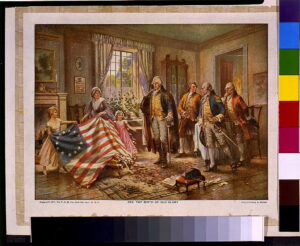
It was June 14, 1777, when the United States approved the design of the first national flag. This design was created by Betsy Ross, and it looked a little different back then than it looks today.
The holiday is a different story. Wisconsin teacher Bernard J. Cigrand was one of the many to first urge for a holiday honoring the flag. In 1885, he and his students at Stony Hill School in Waubeka, Wisconsin, observed June 14 as a birthday for the flag, according to Britannica. He would go on to publish an essay in the Chicago Argus newspaper about the importance of a day to honor the flag. Some might call him the “Father of Flag Day.”
In 1888, William T. Kerr founded the American Flag Day Association of Western Pennsylvania. However, it was not until 1916 that President Woodrow Wilson would proclaim June 14 as Flag Day. In 1949, the United States Congress passed legislation making it a permanent holiday.

Although Flag Day is in the summer when most schools are out, Scholastic offers many resources you can use to teach the history of the flag to your students. Many of these resources are even free for a limited time! These resources are excellent to keep in your back pocket for the next time you need to make the history of the U.S. flag engaging and educational.